

Members
The Center is currently co-directed by Gastón Ares (Faculty of Chemistry) and Alejandra Girona (School of Nutrition). It brings together faculty members from the following units of Universidad de la República (Uruguay): the Faculty of Chemistry, School of Nutrition, Faculty of Psychology, Interdisciplinary Space, Faculty of Architecture, Design and Urbanism, Faculty of Social Sciences, Faculty of Agronomy, Faculty of Economics and Administration, Faculty of Information and Communication, Northeast Regional University Center (CENUR Noreste), East Regional University Center (CENUR Este), and the Apex Program. It also includes researchers from international institutions.

Gastón Ares
Faculty of Chemistry,
Udelar
Food Engineer and PhD in Chemistry. He is an Associate Professor at the Sensometrics and Consumer Science Laboratory of the Pando Technological Pole Institute, Faculty of Chemistry, at Universidad de la República. He is also co-director of the Interdisciplinary Center on Food and Wellbeing at Universidad de la República. He has extensive experience in research and teaching in the field of eating behavior, food environments and public policies . He is the author of more than 400 scientific articles published in peer-reviewed journals, several book chapters, and numerous presentations at national and international conferences. He is a Level III Researcher in Uruguay’s National System of Researchers. He currently serves as Co-Editor-in-Chief of the journal Cleaner Food Systems and as Associate Editor of the international journal Appetite. He has served as a consultant for the Pan American Health Organization and was a member of the Public Policy Subgroup of the WHO Nutrition Guidance Expert Advisory Committee of the World Health Organization between 2018 and 2024.

Alejandra Girona
School of Nutrition,
Udelar
Bachelor’s degree in Nutrition, Master’s degree in Social Psychology, and PhD in Health Sciences. She is an Associate Professor in the Department of Basic Nutrition at the School of Nutrition, Universidad de la República. She is also co-director of the Interdisciplinary Center on Food and Well-being at Universidad de la República. She has extensive teaching experience at the undergraduate, graduate, and continuing professional education levels. She has participated in numerous national and international research projects focusing on maternal, child, and adolescent nutrition. She has served as a consultant for the Food and Agriculture Organization of the United Nations, the United Nations Development Programme, the United Nations Children’s Fund, and the Pan American Health Organization, as well as for national institutions including the Administración de los Servicios de Salud del Estado (State Health Services Administration, ASSE) and the Uruguay Crece Contigo program of Uruguay’s Ministry of Social Development. She is the former President of the Red de Apoyo a la Nutrición y Desarrollo Infantil (Support Network for Child Nutrition and Development).

Florencia Alcaire
Faculty of Chemistry,
Udelar
Food Engineer and Chemical Engineer from the Universidad de la República, Uruguay. She has been a member of the Sensometrics and Consumer Science research group at the Faculty of Chemistry, Universidad de la República, since 2016, and a member of the Interdisciplinary Center on Food and Well-being at Universidad de la República since 2017. During this period, she has contributed to several research lines, including studies on the dietary habits and well-being of the Uruguayan population. Her work has focused particularly on factors associated with the development of healthy eating habits among adolescents and school-aged children, barriers and facilitators to healthy school snacks among children, and the evaluation of information provided on food labels and packaging. She is the co-author of more than 45 scientific articles and is currently pursuing a PhD in Chemistry at Universidad de la República.

Gimena Allegue
School of Nutrition,
Udelar
Bachelor’s degree in Nutrition from the Universidad de la República (Uruguay) and a Master’s degree in Nutrition and Health from the International University of Valencia (Spain), with additional training in community health interventions. She has experience in university teaching, research, and extension activities in the fields of nutrition and public health. She serves as an Assistant Lecturer in the Academic Units of the Department of Food and the Department of Education at the School of Nutrition, where she is involved in undergraduate and graduate teaching, supervision of final degree projects, and participation in academic examination committees. She has participated in educational projects, community outreach activities, and scientific events at both the national and international levels. Her research interests focus on nutrition education, food policies, and nutrition labeling, with particular emphasis on their impact on child health. She is also actively involved in faculty development initiatives and university governance activities, contributing to academic development and the promotion of health from an interdisciplinary perspective.

Lucía Antúnez
Faculty of Chemistry,
Udelar
Food Engineer and PhD in Chemistry from the Universidad de la República (Uruguay). She is an Assistant Researcher at the Sensometrics and Consumer Science Laboratory of the Pando Technological Pole Institute, Faculty of Chemistry, Universidad de la República. Since 2012, she has been a member of the Interdisciplinary Center on Food and Well-being. She is a Level I Researcher in Uruguay’s National System of Researchers. Her research focuses on evaluating strategies to promote healthier dietary patterns, assessing new front-of-pack nutrition labeling formats, and supporting the reformulation of processed foods to reduce their sodium and sugar content. She has also conducted extensive research on innovative methodologies for the sensory characterization of foods. She is the co-author of more than 95 articles published in international peer-reviewed journals, three book chapters, and numerous papers presented at international scientific conferences.

José Balbanian
School of Nutrition,
Udelar
Tenured Assistant Lecturer in the Academic Unit of the Department of Education and Tenured Assistant Lecturer in the Academic Unit for Teaching Support and Communication at the School of Nutrition, Universidad de la República. He is currently completing her Master’s thesis, which focuses on the development of communication skills for clinical nutrition interviews conducted through teleconsultation and telemedicine. In parallel, his work focuses on the use of simulation as a teaching strategy in undergraduate Nutrition education, as well as on teaching, research, and extension activities in the field of Food and Nutrition Education.
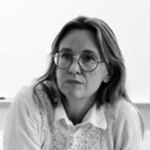
Matilda Baraibar
Södertörn University
Researcher in the Department of Economic History and International Relations at Stockholm University. Her research applies a historical political economy perspective to globalization and agrarian change. She focuses on analyzing the forces shaping international agri-food trade, including technological change and institutional arrangements across multiple levels—from the global to the local—and their differentiated impacts on specific territories. Her most significant recent publications include The Political Economy of Agrarian Change in Latin America: Argentina, Paraguay and Uruguay (Springer International Publishing, Palgrave, 2020) and The Soybean through World History: Lessons for Sustainable Food Systems (Routledge, 2023).

Daniel Bergara
School of Design,
Faculty of Architecture, Design and Urbanism,
Udelar
Industrial Designer and Master’s candidate in Social Economy. He is an Associate Professor of Design at the University Center of Design School, Faculty of Architecture, Design and Urbanism, Universidad de la República (Uruguay). He is a member of the Interdisciplinary Center on Food and Well-being at the Interdisciplinary Space of the Universidad de la República. He is also a member of the Comprehensive Education Program on Design and Social and Solidarity Economy and of the Thematic Network on Social and Solidarity Economy at the Universidad de la República. He is a founding partner of the design studio Diseño Básico and serves as the lead designer of the design team at the Museo Ciencia Viva, a science and technology outreach museum. He is also a founding member of the Latin American Network on Design and Food.

Gerónimo Brunet
School of Nutrition
Udelar
Bachelor’s degree in Sociology and currently pursuing a Master’s degree in Public Policy at the Universidad de la República. He serves as an Assistant Lecturer in the Department of Population Nutrition at the School of Nutrition, Universidad de la República. His main research interests include food security, poverty, food consumption, and the affordability of healthy diets, as well as their relationships with health. He has participated in research using both quantitative and qualitative methodologies, as well as in the monitoring and evaluation of public policies through projects funded by national and international institutions and organizations. He is the co-author of more than 20 scientific articles published in peer-reviewed journals, as well as several technical and outreach reports on these topics.

María Inés Cabot Lujambio
International University of Valencia,
Spain
Food Engineer, lecturer, and researcher specializing in environmental sustainability and the agri-food industry. She holds a PhD in Agricultural Sciences from the Universidad de la República (Uruguay) and a PhD in Food Science, Technology and Management from the Universitat Politècnica de València (Spain). Her research focuses on environmental assessment using Life Cycle Assessment (LCA), the development of indicators to support decision-making and environmental planning, and the analysis of emissions associated with production systems. She has led competitively funded research projects and has published extensively in international scientific journals in the fields of sustainability and environmental management of agri-food systems. In academia, she teaches at the university level and is actively involved in the coordination, supervision, and evaluation of Master’s theses. Her work is characterized by the integration of scientific rigor, practical applicability, and knowledge transfer to the productive sector.

Magela Cabrera
Faculty of Information and Communication
Udelar
Master’s degree in Information and Communication from the Faculty of Information and Communication, Universidad de la República (Uruguay), and Bachelor’s degree in Library and Information Science from the former University School of Library and Information Science, Universidad de la República. She is an Assistant Professor at the Faculty of Information and Communication, where she coordinates the undergraduate courses Specialized Information Sources and Information Literacy. She is a member of the Information Literacy and Reading Competencies Research Group (AlfaInfo.uy) at the Faculty of Information and Communication. She has participated in several national and international research projects on transmedia literacy, informal learning strategies, information literacy, open science, and hate speech. She has been a member of the Interdisciplinary Center on Food and Well-being at Universidad de la República since 2017.

Adriana Cauci
School of Nutrition,
Udelar
Master’s degree in Children’s Rights and Public Policies and Bachelor’s degree in Nutrition from the Universidad de la República (Uruguay). She currently serves as an Associate Professor in the Academic Unit of the Department of Population Nutrition at the School of Nutrition. She is currently pursuing a PhD in Agricultural Sciences, with research focused on agroecology and the reduction of food vulnerability. Her academic career integrates teaching, community engagement, and interdisciplinary research in key areas such as food sovereignty, food and nutrition security, and the right to adequate food. She coordinates and participates in several research and outreach projects on food-related public policies, family farming, and rural school food environments. Her academic work is distinguished by its focus on the socioeconomic dimensions of food systems and the development of sustainable food systems.

Florencia Ceriani Infantozzi
School of Nutrition,
Udelar
Bachelor’s degree in Nutrition, Master’s degree in Public Health Nutrition, and PhD in Science. She specializes in non-communicable diseases and maternal and child nutrition, with a research focus on child and adolescent health. She serves as an Associate Professor in the Academic Unit of Clinical Nutrition at the School of Nutrition, Universidad de la República. She leads a research line on childhood anemia and its social determinants of health.

Rosita De Lisi
School of Design,
Faculty of Architecture, Design and Urbanism,
Udelar
Architect with a PhD in Design, Arts and New Technologies from the University of Camerino, and a Master’s degree in Product Design. She is a Full Professor in the Design Studio Area at the University Center of Design School, Faculty of Architecture, Design and Urbanism, Universidad de la República. She is Co-Director of the Diploma in Toy and Children’s Product Design and a member of the FADU Sustainability Center. She is co-leader of the Circular and Regenerative Economy Research Seed Group and of an Institutional Strengthening Project for Improving Research Quality funded by the Sectoral Commission for Scientific Research (CSIC). She leads research projects on waste management and was a member of the interdisciplinary team that developed the Nutritional Guidance Kit for Early Childhood (Montevideo Municipality–Universidad de la República, 2022–2023). Her research interests focus on the circular economy, regenerative principles, and sustainability from a systems perspective, with particular emphasis on how patterns of habitation, production activities, and consumption habits affect the environment, society, culture, and the economy.

Federico De Rui
Interdisciplinary Space,
Udelar
Advanced undergraduate student in Nutrition and Academic Assistant to the Director of the School of Nutrition, Universidad de la República. He has teaching experience as a member of the Academic Unit of the Department of Basic Nutrition, where he contributed to undergraduate courses on nutritional assessment and nutritional status evaluation. He has also participated in several research and community engagement projects aimed at advancing knowledge on food systems by integrating dietary, social, and production-related dimensions from a comprehensive and interdisciplinary perspective. He is a member of the Interdisciplinary Center on Food and Well-being at the Universidad de la República since 2026.
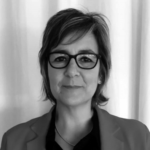
Gabriela Fajardo
School of Nutrition,
Udelar
Bachelor’s degree in Nutrition and PhD candidate in Community Nutrition. She is a Full Professor in the Department of Population Nutrition at the School of Nutrition, Universidad de la República. She is a member of the Right to Food Observatory at the School of Nutrition and of the Interdisciplinary Center on Food and Well-being. She has participated in and led national and international research projects on the development of a nutritionally based basic food basket, nutritional status surveillance, the realization of the right to adequate food among people deprived of liberty, food insecurity and its determinants and coping strategies, the monitoring and implementation of the Food Assistance Program of the Montevideo Municipality, and body composition assessment using isotope techniques and dual-energy X-ray absorptiometry (DXA). These initiatives have been funded by organizations including the Sectoral Commission for Scientific Research (CSIC), the Pan American Health Organization, and the International Atomic Energy Agency. She has also served as a consultant for the National Administration of Public Education, the United Nations Children’s Fund, the Food and Agriculture Organization of the United Nations, the Pan American Health Organization, and the Uruguay Crece Contigo program of Uruguay’s Ministry of Social Development.

Ana Giménez
Faculty of Chemistry,
Udelar
Associate Professor in the Sensometrics and Consumer Science Area of the Pando Technological Pole Institute, Faculty of Chemistry, Universidad de la República. She has participated in undergraduate and graduate teaching activities in the fields of Sensometrics and Consumer Science. She has published more than 170 scientific articles in international peer-reviewed journals and more than one hundred papers presented at international conferences. Her current research interests include identifying strategies to reduce consumer-level food waste, investigating food shelf life, and evaluating strategies to reduce salt and sugar content in processed foods.

Ignacio Gianelli
Stockholm Resilience Center (Sweeden),
and South American Institute for Resilience
and Sustainability Studies (Uruguay)
Transdisciplinary researcher whose work seeks to expand desirable futures for the ocean and coastal food systems. He is currently a Postdoctoral Researcher at the Stockholm Resilience Centre, where he coordinates co-creation processes that bring together communities, artists, researchers, and local stakeholders to envision and build sustainable futures. He previously completed his PhD in Marine Sciences at the University of Santiago de Compostela, where he explored the meanings of transformative change in small-scale fisheries through transdisciplinary approaches and art–science collaborations. His career combines academic research with place-based practice: he has worked at the Marine Sciences Unit of the Universidad de la República and as a consultant in fisheries management. He is affiliated with the SARAS Institute in Uruguay and Stellenbosch University in South Africa, and contributes to the work of the Earth Commission 2.0.
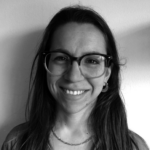
Vanessa Gugliucci
School of Nutrition,
Udelar
Bachelor’s degree in Nutrition, with professional experience in clinical practice and food and nutrition education. She has been a lecturer in the Bachelor’s Degree in Nutrition at the School of Nutrition, Universidad de la República, since 2019, conducting teaching and community outreach activities related to community nutrition. She has been a member of the Interdisciplinary Center on Food and Well-being since 2018, participating in research lines focused on the implementation of front-of-package nutrition labeling, digital marketing, and social representations of home-cooked food and cooking practices. She is co-creator of Sabores Andantes, a project aimed at promoting and revaluing home cooking. She is currently pursuing a Master’s degree in Public Health at the Center for Interdisciplinary Studies of the National University of Rosario (Argentina).

Silvana Juri
School of Design,
Faculty of Architecture, Design and Urbanism,
Udelar
PhD in Transition Design from Carnegie Mellon University, Master’s degree in Sustainable Design from University of Brighton, and Bachelor’s degree in Fine Arts and Visual Arts from the Universidad de la República (Uruguay). She is an Associate Professor at the University Center of Design School (Faculty of Architecture, Design and Urbanism, Universidad de la República) and an Associate Researcher at the SARAS Institute. She is also a member of the Institute for Sustainable Food System Transitions (ITSSA-Udelar). Her research focuses on transformations toward sustainability in food systems, systems approaches, futures-oriented methodologies, and transdisciplinary and co-creation processes. She is a member of the network and editorial committee of the Journal of the Latin American Network on Design and Food, as well as of the International Society for Social-Ecological Systems (SocSES). She recently completed her postdoctoral project at the Stockholm Resilience Centre (Stockholm University), focused on the role of gastronomy in food system transformations and the concept of gastronomic landscapes.

Leandro Machín
Faculty of Psychology,
Udelar
Psychologist and researcher with extensive experience in the study of food behavior and consumer perception. He works as a lecturer and researcher at the Faculty of Psychology, Universidad de la República, participating in interdisciplinary teams related to public health, nutrition, and food policies. His research focuses on the influence of factors affecting food choice, including the analysis of nutrition information and front-of-package labeling. He has participated in numerous research projects funded by national and international organizations and has produced a substantial body of scientific work published in high-impact peer-reviewed journals. He has also contributed to the design and evaluation of public policies, including front-of-package nutrition labeling in Uruguay. His research combines qualitative and quantitative methodologies, including innovative techniques such as eye-tracking, to understand the cognitive processes involved in food choice.

Cecilia Marrero
Faculty of Information and Communication, and
Northeast Regional University Center,
Udelar
Master’s Degree in Science, Technology and Society from the National University of Quilmes. PhD candidate in Social Sciences at the University of Buenos Aires. Bachelor’s Degree in Communication Sciences. Director of the Tacuarembó Campus, CENUR Noreste, and Associate Professor of Organizational Communication. Her doctoral research focuses on the potential of upcycling as a strategy for valorizing and reducing fruit and vegetable losses, with a focus on northeastern Uruguay. Her research interests include organizational communication, science communication, behavior change strategies, science, technology and innovation, and territorial development. These research areas converge around a common interest in understanding how actors, organizations, and institutions build capacities to address complex problems and foster processes of social and territorial transformation.

Mariana Meerhoff
East Regional University Center,
Udelar
Bachelor’s degree in Biology, Master’s degree in Ecology, and PhD in Science. She is a Full Professor in the Department of Ecology and Environmental Management at the Eastern Regional University Center (CURE), Universidad de la República, based in Maldonado, Uruguay. She is also a Full Professor in the PEDECIBA program in the areas of Biology and Geosciences, and a Level III Researcher in Uruguay’s National System of Researchers (SNI). Her research lines include the impacts of global change on freshwater ecosystems, including the effects of land-use changes and production intensification on water quality, biodiversity, and carbon emissions. One of her research areas focuses specifically on the environmental impacts of different food production systems. She has authored approximately 120 scientific articles published in peer-reviewed journals and numerous book chapters. She has extensive experience teaching undergraduate and graduate courses across different academic programs and has supervised the training of national and international undergraduate and graduate researchers.

Gabriela Mordecki
Faculty of Economic Science
and Administration,
Udelar
Economist, with a Master’s-level Diploma in Trade Modelling and Policy: Regional Economic Integration from the University of Antwerp (UFSIA), Belgium, and a specialization in Industrial Economics from the Regional University of Blumenau (FURB), Brazil. She is a lecturer and researcher at the Institute of Economics of the Faculty of Economic Sciences and Administration, Universidad de la República (FCEA–Udelar), within the Macroeconomic Analysis and Trade Group. She specializes in economic trends, uncertainty, competitiveness, and economic forecasting. She teaches the Economic Outlook Analysis Workshop and the National Economy Seminar within the Bachelor’s Degree in Economics at FCEA–Udelar. She has published her research in various academic journals and books.

Virginia Natero
School of Nutrition,
Udelar
Bachelor’s degree in Nutrition, Master’s degree in Nutrition and Public Health, and PhD in Health Sciences. She is an Associate Professor in the Academic Unit of the Department of Food (UADA) and a Culinary Arts Technician. She has experience in undergraduate and graduate teaching, continuing education, and workshops on food, gastronomy, and food science. She has participated in various research lines and has contributed to national and international scientific publications. Her work has focused on the study of food-related public policies, particularly food advertising and strategies for sodium and sugar reduction. She served as Coordinator of the Nutrition Program at the Ministry of Public Health of Uruguay from 2021 to 2024. She has worked as a consultant for the United Nations Children’s Fund and the Pan American Health Organization.

Cecilia Ois
East Regional University Center,
Udelar
Economist with extensive experience in territorial development, public policy, and the strengthening of micro, small, and medium-sized enterprises (MSMEs). She is currently Coordinator of the Treinta y Tres SME Center (ANDE–Business Chamber) and a lecturer at the Universidad de la República (CURE/FCEA), where she teaches “Introduction to the Entrepreneurial Ecosystem.” She is a member of the research team working on “Local agri-food systems, collaboration networks, and environmental innovation in Uruguay.” Her professional experience includes roles as Academic Assistant to the Director at CURE and as an Economic Advisor at the Treinta y Tres Departmental Government, where she led the formulation of budgets and investment projects (FDI, PDGS). She has also collaborated as a consultant for international organizations such as the United Nations Development Programme (UNDP), the European Union, and CAF – Development Bank of Latin America and the Caribbean. In academia, she is pursuing a Master’s degree in Territorial Development at the National Technological University (UTN, Argentina) and holds a postgraduate degree in Economics and Management for Inclusion from the Universidad de la República. Her publications and conference presentations focus on microfinance, entrepreneurship, decentralization, price formation, and value chains in the agricultural sector, combining technical expertise with institutional and social commitment.

Pablo Pereira
School of Nutrition,
and Apex Program,
Udelar
Bachelor’s degree in Nutrition and Master’s degree in Children’s Rights and Public Policies. He serves as an Associate Professor in the Extension Area of the School of Nutrition and is Director of the APEX Program. Since its establishment, he has developed comprehensive and interdisciplinary teaching activities within projects focused on family care and follow-up. He leads research lines related to public policies, food practices, and processes of medicalization of food and nutrition. He has extensive experience in community engagement and a deep understanding of the territory of Municipality A. Over the past five years, he has also supported the process of organizational change within the APEX Program in his role as Academic Coordinator.

Camila Peveroni
School of Nutrition,
Udelar
Bachelor’s degree in Nutrition and Assistant Lecturer in the Academic Unit of Clinical Nutrition at the School of Nutrition, Universidad de la República, where she participates in undergraduate teaching activities and provides nutritional care at the Oncology Nutrition Clinic of the Hospital de Clínicas. She has been a member of the Interdisciplinary Center on Food and Well-being since 2026. She is currently pursuing a specialization in Nutrition for Non-Communicable Chronic Diseases.

Anabel Rieiro
Faculty of Social Sciences,
Udelar
PhD in Social Sciences, specializing in Sociology. She is a Full-time Associate Professor in the Department of Sociology at the Faculty of Social Sciences, Universidad de la República (Uruguay). She is responsible for the research area “Sociology of Dwelling: Food, Economy, and Environment.” She is Co-Coordinator of the Interdisciplinary Center “Environmental Justice: Memories and Rights” and former Coordinator of the Extension and Community Engagement Unit of the same faculty. Since 2015, she has been a member of the National System of Researchers of the National Agency for Research and Innovation (ANII), where she currently holds Level I status. Between 2019 and 2022, she was a member of the Working Group of the Latin American Council of Social Sciences (CLACSO) “Reinventing the Commons” and is currently a member of the CLACSO Working Group on Political Ecology.

Fernanda Risso
School of Nutrition,
Udelar
Bachelor’s degree in Nutrition, with postgraduate training in Family Intervention and an academic career at the School of Nutrition, Universidad de la República, since 2013. Her work combines teaching, research, and community engagement, with a strong commitment to the development of applied knowledge addressing social issues, particularly those related to the right to food, childhood, and socio-food inequalities. She is currently pursuing a Master’s degree in Children’s Rights and Public Policies at the Universidad de la República. Her work focuses on population nutrition, food security and sovereignty, and the analysis of agri-food systems from a human rights, environmental, and public policy perspective. She has actively participated in research and community engagement projects related to food insecurity, food environments, and food production, with particular emphasis on vulnerable populations and urban and rural contexts. She is a member of national and international academic and interdisciplinary teams and has contributed to scientific publications in peer-reviewed journals, books, and technical reports.

Raquel Rodríguez Garmendia
School of Nutrition,
Udelar
Bachelor’s degree in Nutrition and Master’s degree in Nutrition with an emphasis on Public Health. She is an Associate Professor in the Academic Unit of the Department of Basic Nutrition, School of Nutrition, Universidad de la República. She works as a nutritionist within the Primary Health Care Network of ASSE (State Health Services Administration). She has been a member of the Interdisciplinary Center on Food and Well-being since 2019, participating in research projects related to breastfeeding and infant feeding. She is the co-author of several articles published in international journals and presentations at national and international conferences.

Viviana Santín
School of Nutrition,
Udelar
Bachelor’s degree in Nutrition and Associate Professor in the Department of Basic Nutrition at the School of Nutrition, Universidad de la República. She has teaching experience in undergraduate courses and professional development programs since 2013, with a life-course approach and a focus on maternal and child nutrition, adolescence, and sports nutrition. She is a member of the Interdisciplinary Center on Food and Well-being, where she works on food education and the promotion of healthy environments, with an emphasis on intervention strategies. She previously worked at the Montevideo Municipality on socio-educational projects, particularly those related to children and adolescents, and was part of the Food Education Program Cocina Uruguay (2007–2022). Within the Health Division, she worked on nutrition-related initiatives linked to maternal and child health programs, adolescent health, and healthy canteens. She currently coordinates the Departmental System of Community Kitchens within the Department of Economic Development.

Junior Miranda Scheuer
Faculty of Agronomy,
Udelar
Agricultural Engineer. Associate Professor at the Faculty of Agronomy. His research has focused on the analysis of agri-food systems and family farming in Uruguay, addressing their production, commercial, and territorial challenges. He has studied the transformations affecting family farmers and how support networks strengthen their resilience in the face of economic, health, and environmental crises. He has also investigated access to differentiated markets and short supply chains, identifying opportunities for agroecological practices and highlighting the need for public policies that promote equity and sustainability. A key component of his work has been the development of qualitative and participatory methodologies that incorporate stakeholders’ perspectives into knowledge production and the design of territorial development strategies. He has also analyzed institutional instruments, identifying weaknesses and providing evidence to support more inclusive policies. Overall, his work aims to strengthen family farming and its role in sustainable rural development.

Leticia Varela Pereira
Faculty of Architecture, Design and Urbanism,
Udelar
Bachelor’s degree in Graphic Design, with a postgraduate degree in Community-Based Cultural Policies from the Latin American Faculty of Social Sciences (FLACSO), and a specialization in Toy and Children’s Product Design from the Universidad de la República. She is a lecturer at the Faculty of Architecture, Design and Urbanism of the Universidad de la República, teaching in the Bachelor’s Degrees in Visual Communication Design and Industrial Design. She is a member of the Interdisciplinary Center on Food and Well-being at the Universidad de la República, where she participates in several research projects involving participatory and co-creation methodologies. She also coordinates and develops graphic materials for scientific dissemination. She is the coordinator of the project “Como Juego Aprendo” (“I Learn While I Play”), an educational and playful initiative for children focused on healthy eating. The project received funding through the Competitive Grants for Culture Program of the Ministry of Education and Culture in 2013 and 2019 and has been implemented through numerous workshops in schools, cultural centers, and festivals. She has developed a wide range of educational and cultural projects related to food and childhood.

Leticia Vidal
Faculty of Chemistry,
Udelar
Food Engineer and PhD in Chemistry from the Universidad de la República (Udelar). She has been a member of the Sensometrics and Consumer Science research group at the Faculty of Chemistry, Udelar, since 2011, and of the Interdisciplinary Center on Food and Well-being since 2012. She has participated in several research lines, including the development of sensory food characterization methodologies and consumer studies; research on dietary habits and well-being among the Uruguayan population; recommendations for the gradual reduction of sugar and salt; and studies on perceptions of nutrition labeling and other elements of food labels. Currently, her main research activities focus on infant feeding practices and retail food environments. She is the co-author of more than 100 articles published in international journals, four book chapters, and numerous presentations at international conferences. In addition, she is a member of the editorial board of the journal Food Quality and Preferenceand of Uruguay’s National System of Researchers.

Bruno Vique
Apex Program,
Udelar
Agricultural Engineer from the Universidad de la República, currently pursuing a Master’s degree in Agricultural Sciences (Plant Sciences track) at the Faculty of Agronomy. He has worked as a teaching assistant in the APEX-Cerro Program for the past four years, focusing on local food production processes, with an emphasis on community gardens and food sovereignty approaches. Through APEX, he participates in community-based educational initiatives and contributes to the development of educational projects related to agroecological production in Municipality A of Montevideo.

Agustina Vitola
Interdisciplinary Space,
Udelar
Social Anthropologist (Faculty of Humanities and Education Sciences, Universidad de la República) and Food Event Designer (European Institute of Design, Barcelona). Her professional work is closely linked to design and the food sector. Her main interest is to propose new ways of eating that are healthier, more sustainable, creative, and emotionally meaningful. With this aim, she founded Cuchara, a food design studio specializing in the design and production of gastronomic events and the development of services related to gastronomy. She is a member of the Interdisciplinary Center on Food and Well-being at the Universidad de la República, where she works on topics related to the revaluation of home cooking, food waste, and, more recently, early childhood nutrition.

Cristina Zurbriggen
Faculty of Social Sciences,
Udelar
PhD in Social Sciences from the Eberhard Karls University of Tübingen, Germany. She is currently a Professor in the Department of Political Science at the Faculty of Social Sciences, Universidad de la República. She is also a member of Uruguay’s National System of Researchers and of the Advisory Council of the South American Institute for Resilience and Sustainability Studies. Her research has addressed topics such as governance, policy networks, public innovation, environmental governance, and sustainable transitions. Her current research interests focus primarily on innovation labs, co-creation methodologies, and other systemic intervention approaches to address the future of complex public issues. Within this framework, she coordinates the Transition Lab (T-LAB).

Carlos Zunino
School of Medicine,
Udelar
Medical doctor, pediatrician, and Master’s degree holder in Bioethics. He is a lecturer in Pediatrics at the Faculty of Medicine, Universidad de la República, where he serves as Associate Professor in the Academic Unit of Pediatrics C and as Assistant Professor in the Academic Unit of Teaching—Department of Medical Education, within the Curriculum Coordination of the Doctor of Medicine Program. He carries out teaching, research, and community engagement activities on topics related to child and adolescent health from a comprehensive, rights-based perspective. He contributes a Bioethics perspective to clinical issues and public policies. He is a member of the Commission on Bioethics and Comprehensive Quality of Health Care and of the Advisory Bioethics Commission of the Medical College of Uruguay.