

Research
projects
Eating behaviour
and wellbeing
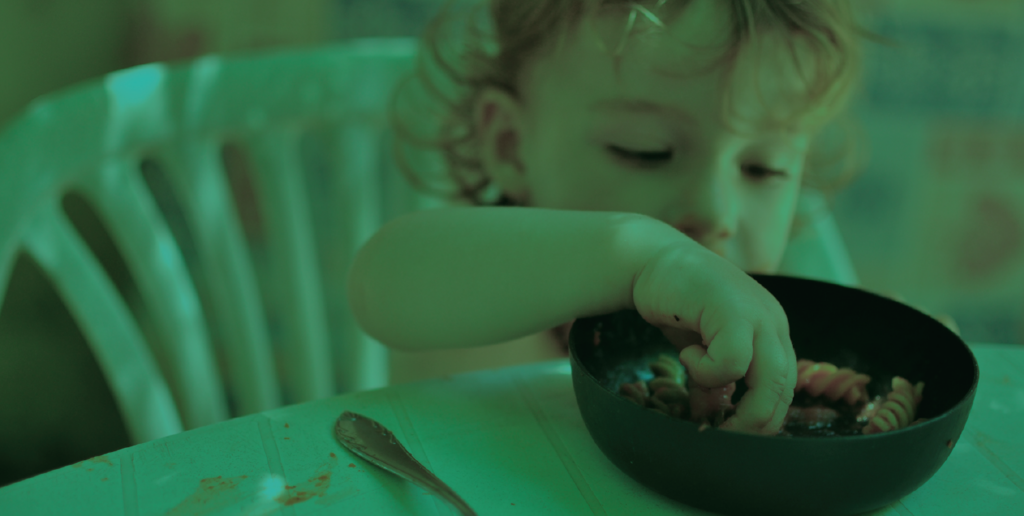
Meanings, motivations, and practices associated with complementary feeding in early childhood
Principal researchers: Leticia Vidal, Alejandra Girona
Funding: CSIC, Udelar
Period: 2023-2025
Childhood malnutrition remains one of the country’s major public health challenges, as significant levels of both undernutrition and overnutrition coexist. Diet is one of the main determinants of malnutrition and can act either as a protective factor or as a contributor to its development. Adequate nutrition from the earliest stages of life is essential for healthy physical and cognitive development and for maintaining good health throughout the life course. Many childhood malnutrition problems may be related to inappropriate complementary feeding practices. National studies suggest that the main departures from nutritional recommendations are associated with limited dietary diversity and inadequate food textures, delayed introduction of meat, and early introduction of sweetened dairy products. In addition, evidence indicates that consumption of ultra-processed products is low to moderate during the first months of life but becomes increasingly common as children grow older. Given the central role of parents and caregivers in infant and young child feeding, it is essential to understand the meanings that mothers and fathers attribute to the foods they choose for their children’s diets, as well as their feeding practices and the motivations underlying them. In particular, exploring practices that diverge from nutritional recommendations is a crucial first step toward identifying strategies to improve them. This project seeks to advance knowledge in this area through a mixed-methods approach. The qualitative component will use in-depth individual interviews to explore the meanings and motivations underlying the main departures from nutritional recommendations for infants and young children. It will also provide a deeper understanding of when parents and caregivers consider it appropriate to begin offering ultra-processed products high in nutrients of concern to their children. The quantitative component will estimate the timing of the introduction of recommended and non-recommended foods, the frequency with which they are offered, and the motivations associated with these practices. This information could contribute to the development of food and nutrition policies, as well as communication and intervention strategies aimed at improving infant and young child feeding practices and, ultimately, enhancing children’s nutritional status.
Food insecurity and coping strategies among households with children in vulnerable situations during the COVID-19 crisis
Principal researchers: Gastón Ares, Gabriela Fajardo
Funding: CSIC, Udelar
Period: 2022-2024
The coronavirus (COVID-19) pandemic led to an increase in food insecurity, with negative consequences for health in the short, medium, and long term. The impacts of food insecurity are particularly severe for children, as health and nutritional status during this stage of life have a profound influence on growth and development. Households experiencing food insecurity not only face immediate adverse health consequences but are also vulnerable to a range of longer-term social and economic impacts. The serious consequences of food insecurity highlight the need for public policies and interventions that ensure access to adequate food and mitigate its negative effects. Designing such strategies requires an in-depth understanding of the coping strategies adopted by food-insecure households with children, the quality of their diets, and the household characteristics associated with food insecurity. Within this context, this project forms part of the thematic sub-area Food and Nutrition in Contexts of Increased Vulnerability and aims to explore food insecurity and the coping strategies adopted by households with children in vulnerable situations during the COVID-19 crisis in Uruguay. The proposed research strategy employs a mixed-methods approach, combining the strengths of qualitative and quantitative methods. The qualitative component will generate evidence to inform the design of the quantitative component, which will estimate the prevalence of food insecurity experiences and coping behaviours and identify associations between relevant variables. The knowledge generated by the project will provide valuable evidence to support the design of strategies and public policies aimed at addressing food insecurity.
Determinants of infant formula use in Uruguay: Contributions to the design of policies to promote breastfeeding
Principal researchers: Leticia Vidal, Alejandra Girona
Funding: CSIC, Udelar
Period: 2021-2023
The protection of breastfeeding has been recognized as one of the most cost-effective public health interventions. Breastfeeding is the natural and optimal way to provide infants with all the nutrients they need for healthy growth and development and offers numerous benefits for both children and breastfeeding women. Despite considerable national and international efforts to improve breastfeeding practices, breastfeeding indicators remain below established targets. The widespread availability of commercial infant formula and the marketing strategies used to promote these products are among the factors contributing to low rates of exclusive breastfeeding worldwide. In this context, the objective of this project is to explore the determinants of commercial infant formula use among children aged 0–23 months in order to generate evidence to inform the design and strengthening of public policies, as well as communication and education campaigns that protect and promote breastfeeding and appropriate infant and young child feeding practices. Families’ decisions about how to feed their children result from a complex interaction of social, cultural, and economic factors. Understanding the motivations that lead families to choose infant formula is therefore essential for designing strategies to protect breastfeeding. The project will explore these issues using a qualitative approach based on in-depth interviews with mothers and fathers, facilitators of family support groups during the prenatal and postnatal periods, and healthcare professionals. The study will examine families’ experiences with breastfeeding and the biological, emotional, and environmental factors that act either as protective factors for breastfeeding or as drivers of infant formula use during the first two years of life. The project will also explore healthcare professionals’ perspectives, identifying the specific circumstances in which they decide to prescribe or recommend infant formula and the reasons underlying those decisions. In addition, the project includes a quantitative component to examine associations between infant formula use at discharge from maternity hospitals and characteristics of newborns, mothers, and maternity facilities, using data from Uruguay’s Perinatal Information System. A further component will analyse the information provided on the labels of infant formula products marketed in the city of Montevideo. The project is expected to generate knowledge and evidence to support the development of public policies, communication campaigns, and interventions aimed at protecting and promoting breastfeeding and reducing the unjustified use of infant formula.
Perceptions of factors associated with the development of healthy eating habits among school-aged children and adolescents
Principal researcher: Alejandra Girona
Funding: FAO
Period: 2021-2022
Healthy eating during childhood and adolescence is essential for maintaining good health and supporting optimal physical and cognitive development. Poor dietary habits are one of the main risk factors for malnutrition. Despite the various initiatives implemented in Uruguay to improve children’s and adolescents’ diets, their eating habits continue to fall short of nutritional recommendations. In this context, the objective of this project was to explore the perspectives of stakeholders within the education system regarding the diets of children and adolescents in Uruguay. Using a qualitative research approach, in-depth interviews were conducted with teachers, school principals, and managers of school cafeterias from public and private educational institutions across the country, as well as with institutional representatives serving on the Interinstitutional Commission for the Implementation of Law No. 19140.
Food security among households with school-attending adolescents in Montevideo during the COVID-19 public health emergency
Principal researcher: Alejandra Girona
Funding: Espacio Interdisciplinario, Udelar
Period: 2020-2021
The coronavirus (COVID-19) pandemic triggered an unprecedented global economic crisis. In Uruguay, the most vulnerable households experienced increasing difficulties in accessing sufficient and nutritious food, raising concerns about a potential increase in food and nutrition insecurity across the country. Within this context, the overall objective of this study was to estimate the prevalence of food security and examine food-related behaviours among households with school-attending adolescents in Montevideo during the COVID-19 public health emergency. A cross-sectional study was conducted in public primary and secondary schools using a self-administered questionnaire completed by the adolescents’ primary caregivers. The findings highlighted the need to strengthen government policies and programmes aimed at improving access to food for the most vulnerable Uruguayan households, as well as to evaluate the impact of these interventions on the populations they are intended to benefit.
Meanings of food in early childhood: Contributions to the design of public policies and intervention strategies
Principal researchers: Alejandra Girona, Leticia Vidal
Funding: CSIC, Udelar
Period: 2019-2021
Nutrition during the early years of life is closely linked to children’s growth, development, and health. Both the type and quantity of foods children consume, as well as the feeding practices used by their caregivers, are modifiable factors that influence childhood malnutrition. The diets of infants and young children largely depend on their parents and caregivers, who make decisions about what, how, where, when, and with whom children eat. In this context, the project aimed to explore in depth the meanings attributed to foods offered to children between 6 months and 5 years of age, as well as the feeding strategies used by parents and caregivers. A mixed-methods approach was employed, combining qualitative and quantitative methods. The qualitative component consisted of in-depth interviews with mothers and fathers (n = 42), paediatricians (n = 13), and educators or caregivers from early childhood education and care centres (n = 13). The quantitative component included online and face-to-face questionnaires administered to mothers and fathers (n = 330–617) and healthcare professionals (n = 154–212). The findings revealed the coexistence of feeding practices that both support and hinder children’s health and development in households as well as in early childhood education and care settings. Food choices for infants and young children were found to be influenced by considerations of health, pleasure, and convenience, leading families to select both healthy foods and ultra-processed products. These findings underscore the need to develop dissemination, awareness-raising, training, and support strategies with a strong interdisciplinary focus, targeting families, healthcare professionals, and the educational community. Such strategies should aim to reduce the prevalence of suboptimal feeding practices while promoting behaviours that encourage healthy dietary habits in line with existing dietary guidelines and recommendations, ultimately contributing to long-term improvements in children’s diets.
Evaluation of the effectiveness of food and nutrition education materials on families’ attitudes, beliefs, and behaviours
Principal researchers: Leticia Vidal, Gerónimo Brunet
Funding: UNICEF Uruguay
Period: 2019-2021
Educational strategies aimed at improving nutrition knowledge during complementary feeding are among the interventions that can enhance the nutrition, health, and well-being of infants and young children. Since 2013, the Uruguayan government has distributed an educational booklet entitled The First Aromas from My Home Kitchen to all families with newborns as part of the Welcome Kit, with the aim of promoting appropriate infant and young child feeding practices. Within this context, the objective of this project was to evaluate the effect of an updated version of The First Aromas from My Home Kitchen on the attitudes, beliefs, and behaviours related to infant feeding among families living in the city of Montevideo with infants aged 10 months or younger. A longitudinal study design was used. Families with infants aged between 1 and 4 months were recruited during paediatric consultations and completed a baseline survey. A follow-up survey was administered when the children were between 7 and 10 months of age and had progressed in the introduction of complementary foods. Open-ended and multiple-choice questions were used to explore a range of beliefs, attitudes, and behaviours related to infant feeding. A quasi-experimental design was used to evaluate the impact of the updated educational material by comparing one group of families who received the original version of The First Aromas from My Home Kitchen with a second group who received the updated version. To strengthen the findings, data triangulation was conducted through in-depth interviews with families of children aged 7–10 months, an assessment of paediatricians’ beliefs and attitudes regarding infant feeding, and a technical comparison of the two versions of the educational material. The evaluation provided valuable information on complementary feeding practices and families’ perceptions of the educational material. The revisions introduced in the updated version addressed the main deviations from nutritional recommendations during this stage of life. These findings suggest that the revised educational material could contribute to improving infant feeding practices and nutritional status during early childhood in Uruguay.
Barriers and facilitators to healthy school snacks among school-aged children
Principal researcher: Florencia Alcaire
Funding: CSIC, Udelar
Period: 2018-2020
The aim of this project is to identify the barriers and facilitators influencing healthy snack choices among school-aged children. First, the project will assess the food available in educational institutions in the city of Montevideo and evaluate compliance with Law No. 19140, one of Uruguay’s most recent public policies promoting healthy eating among children and adolescents within educational settings. Second, qualitative studies will be conducted with school-aged children using projective techniques to explore how they conceptualize school snacks and to identify the barriers and motivations associated with choosing healthy foods for this eating occasion. Finally, given that parents’ eating behaviours are among the main determinants of children’s dietary habits, an online survey will be conducted with parents of school-aged children. The survey will identify the foods parents typically select for their children’s school snacks, the main reasons underlying these choices, and the barriers and facilitators they encounter when selecting healthy options. In addition, a conjoint analysis approach will be used to evaluate how information presented on food labels influences parents’ perceptions of the suitability of processed food products for their children’s school snacks. The evidence generated by this project will provide a foundation for the development of new public policies aimed at promoting healthier school snacks, as well as communication and health promotion strategies to raise awareness among parents and children about the importance of healthy food choices, ultimately supporting healthier dietary patterns both at school and at home.